THERE IS NO SUCH THING AS a HUMANE EGG
A brief look into common egg production one will find cruelty beyond belief. Rows upon rows of pale, tattered hens, layered ceiling high in cages, to the endless end of dark building after dark building. One does not need to be “extreme” to recognize that those living conditions are nothing more than cruel suffering for those trapped inside the cages.
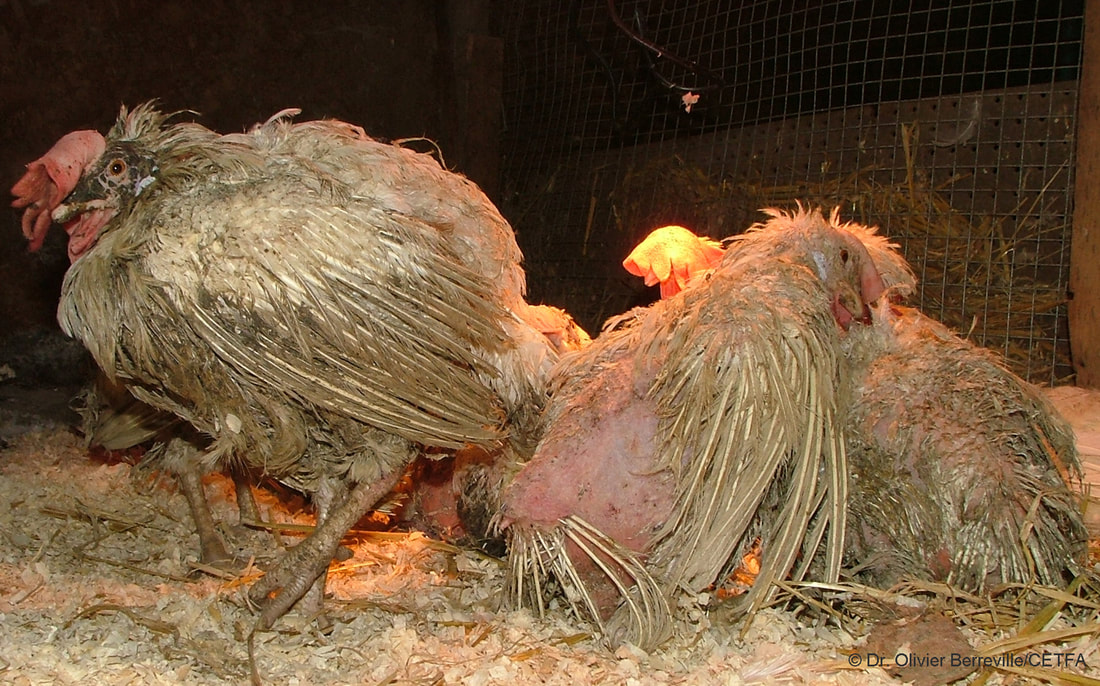
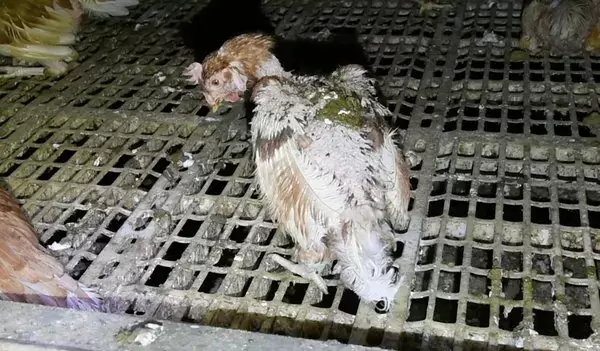
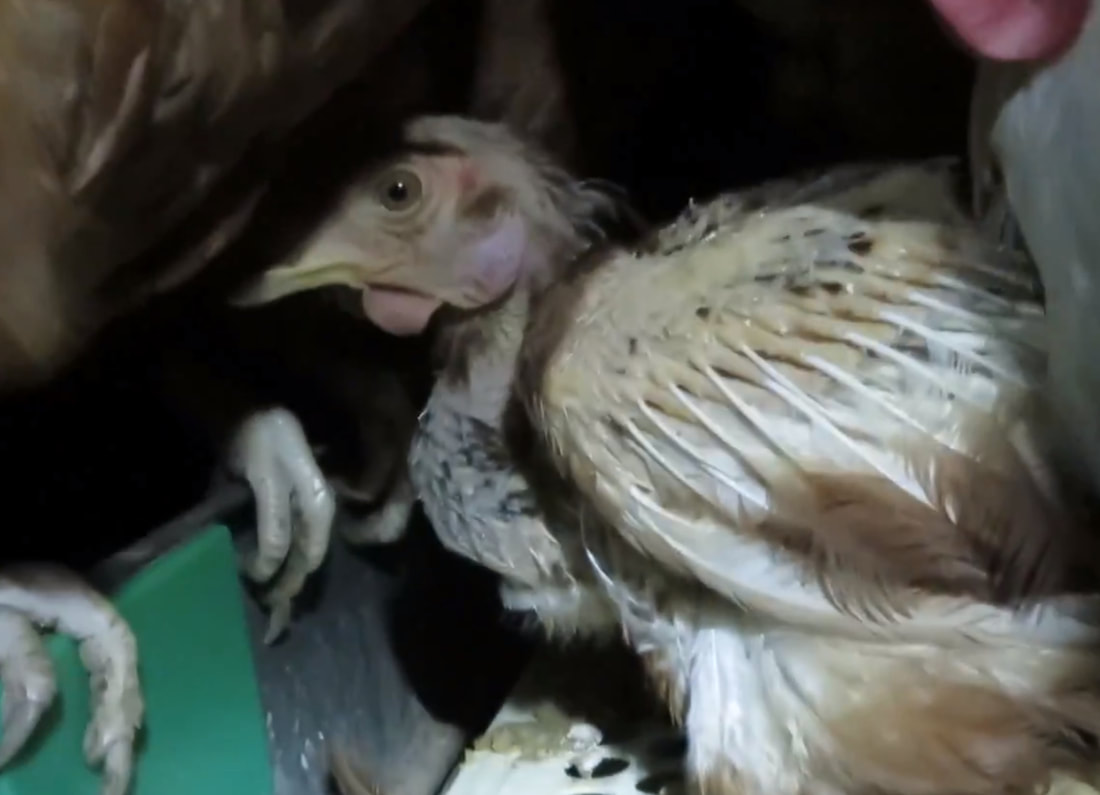
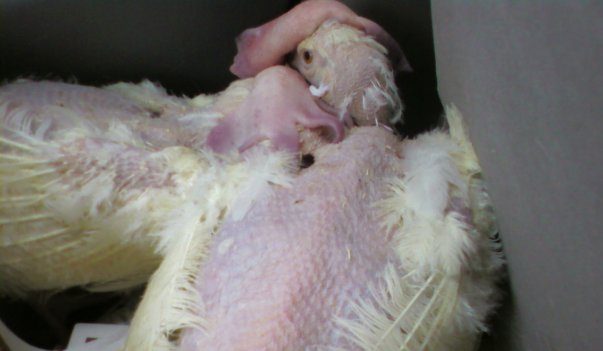
Take a deeper look at the individuals, each trapped in the cages, and we find defeated hens deprived of any coloring naturally given by the sunlight. We find hens who have their beaks cut off all the way up to their nostrils. We find bare backs and bristly wing feathers, beaten bare from the constant brushing against the wire bars. We find sickly hens who no longer have the strength to hold on in the darkness. We find the deceased bodies of weaker hens, and we find those who are still alive pecking at the bodies in repetitive, insane boredom. These hens have never had a dust bath in the sunshine. They’ve never stretched their wings to bask in the warmth of the sun. Every draft of air they have ever felt is heavy with the odor of dead and dying bodies, and the excrement of their sisters.
What we will not find are their brothers. Their brothers have already been killed. They were all destroyed at the hatchery in the most economical and efficient way available. Male chicks who were bred to be egg production birds are useless to the egg industry, and they are useless to the meat industry. The body type of egg production birds are manipulated to have smaller framed bodies while maintaining a high egg output. There is a drastic difference in body size between that of an egg type bird and a “meat” or “broiler” bird. The meat birds grow so big so quickly, that by the time they’re ready for slaughter, their voices are still the sound of a peeping chick.
In the end, after egg production declines, egg type hens are slaughtered in a grinder, or gassed, and disposed of through the canned food industry or the pet foods industry. Laws do not adequately protect these hens through transport, handling, and slaughter.
Now, let’s take a look into the cage free or free range egg production facility. The first thing one will notice is the deafeningly loud noise level. The feeding machines and conveyor belts are cranking continuously. Thousands and thousands of hens, shoulder to shoulder, all clucking loudly in repetitive boredom and desperation. The platform the hens stand on is grated. Long twisted toenails on their pale feet curl and dip into each of the holes in the grating. These hens are not able to peck and scratch at the floor as is natural for them to do. There is no natural dirt, and there is no sunshine. Each one of these hens has her beak cut off all the way up to her nostrils. Their backs are raw and bare from the constant beating and contact they have with their sisters, while packed so tightly in these endlessly long, dark buildings. The odor is the same. Each draft of air carries the particles of the deceased who were unable to carry on any longer. (Animal agriculture accounts for a normal “mortality rate.” Death is inevitable during egg production, and some numbers have been deemed acceptable, and thus become a tax write off for the company.) Basic maintenance of the environment during operation is minimal to the removal of dead bodies as time allows. After all hens are removed and killed, the buildings are prepared for a new flock.
Again, we don’t find their brothers. They were also destroyed back at the same hatcheries that provide chicks for conventional and alternative egg production operations.
With both conventional and alternative egg operations, in order to increase profits when the hens production declines, a forced molt is induced by withholding food for up to fourteen days. These poor exhausted birds are then kicked into another heavy egg laying cycle, squeezed dry of the life they have left, until they are slaughtered.
There is one more common option for egg production, and it’s rising in popularity. This production encompasses that of the small farmer with up to 1,000 hens at a time, just the same as it does for the small, urban farmer. The cruelty behind these operations are elusive. Behind the face of each of these individual hens is a dead brother, and their parents on death row. These hens were all hatched together in hatchery warehouses. Half of their clutch mates were hatched male. At the hatchery each one of these day old female chicks were snatched up by a worker, her sex was determined, and she was tossed back onto a conveyor belt where she would be packed up and shipped out to the next customer. Her brothers were not so fortunate. The conveyor belt the boys were tossed onto had a straight shot into the grinder. Each of the baby boys were destroyed and used for fertilizer and/or feed for other livestock.
Occasionally the urban farmer may place an order for chicks who have not been sexed and sorted. This means that their order will consist of 50% male and 50% female chicks. These day old babies are shipped out in the mail with bills and junk mail, peeping and terrified, they don’t find the wings of their mother. Since these chicks were never sexed, it will not be until the chicks reach puberty at around four months old that their sex will be revealed. It is at this time that the adolescent roosters are discovered. Because the hatcheries do not discriminate against zoning regulations before filling an order, any customer may end up with a handful of baby boys in their backyard when participating in urban farming. Where do these boys go once they begin to crow and the neighbors start to complain? The boys certainly don’t lay eggs, and they are of no use in this situation. The urban farmer must find a creative way out of this mess. Dog and cat pounds do not readily accept roosters and place them up for adoption. The options are abandonment or death.
The egg industry, in their desperation, has taken it upon themselves to deem the egg as some type of health food, claiming that humans must consume eggs in order to live long and prosper. The sad reality is that behind this thin veil of media manipulation, the truth of the harrowing plight of these birds is unjustified on both a health level and an ethical one. Boys must die in order for people to continue the practice of eating eggs, no matter how the eggs are obtained, and eggs consumed by humans are one the biggest contributing factors of heart disease, due to the cholesterol they contain. Please, help us at Danzig’s Roost by living vegan and no longer contributing to the cycle of use and abuse.
The hens
|
|